


Social Media Marketing: What Is It and How Does It Benefit Your Business?
Introduction
Social media has changed the way people communicate discover brand reach products and making purchasing decision platforms such as Instagram Facebook Youtube Linked-in and other social media networks have become a important part of everyday online activities.
Four businesses this creates a major opportunity
Instead of depending only on traditional advertising business can know a social platform to connect directly with their target audience share valuable content build brand awareness generate leads and develop long-term customers relations.
It is for social media marketing comes in.
Social media marketing is may more then simple posting photos or videos on social media it involves creating a planned Strategy To promote a business communicate with its audience distributor useful content increase visibility and achieve specific marketing goals.
whether the new Run a small local business and E commerce Store A start up a professional service company over an established brand social media marketing can help you build a stronger digital presence.
In the guide we will explain what social media marketing is how it work the major platform businesses can use its benefit common mistake to avoid and how your business can create a effective social media marketing strategy.
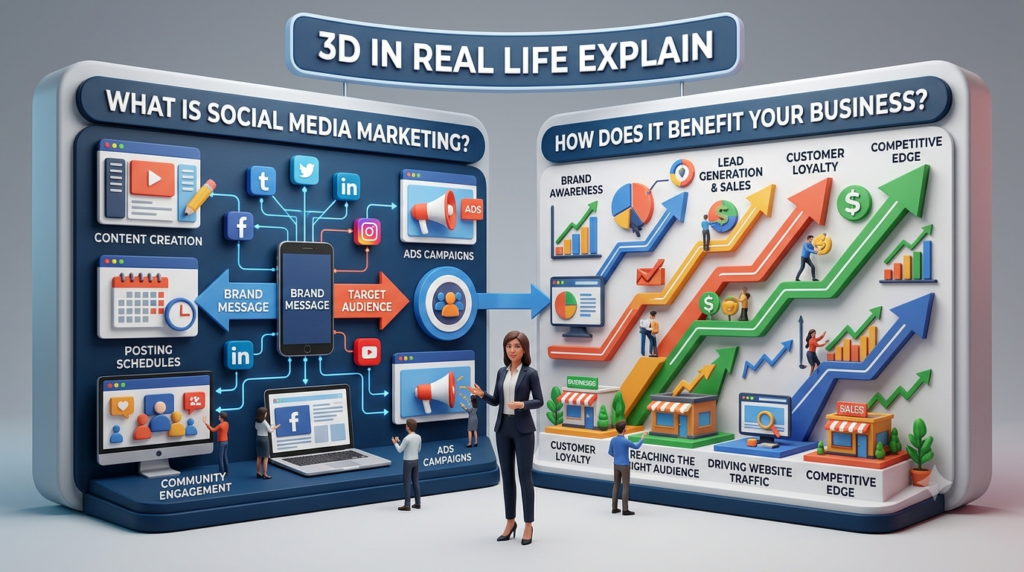
Social Media Marketing is the process of using social media platforms to promote a business, product, service, or brand and connect with a target audience.
In simple words when our business Uses social media to reach potential customer share content communicate with followers promoter products or service and build its brand it is participating in social media marketing
for example imagine that you own a digital marketing agency.
you create an Instagram post explaining how SU can help small business someone intended in digital marketing she’s the poster visiting your profile check your website and eventually contact your agency.
That entire journey can be supported by social media.
Business can use social media for several purpose including:
- Building brand awareness
- Sharing educational content
- Promoting products and services
- Generating leads
- Increasing website traffic
- Communicating with customers
- Building online communities
- Supporting sales
- Improving customer relationships
The key is to have a clear purpose behind your social media activities.
Simply posting content every day does not automatically create business growth. Effective Social Media Marketing requires the right audience, relevant content, consistency, creativity, and continuous measurement.
How Does Social Media Marketing Work?
Social media marketing usually begin with understanding the business and its target audience.
Before creating content a business should identify who it wanted to reach and what those people are interested in.
For example a fashion brand may focus heavily on Instagram Because visual content can be useful for showcasing products AB2B software company May find Linked-in more relevant for reaching business Professional Local All restaurant may use Instagram and Facebook to promote its menu offers customers experience and location.
A basic Social Media Marketing process can look like this:
Research → Strategy → Content Creation → Publishing → Engagement → Promotion → For example
The first step is research.
Businesses need to understand their audience competitors industry trends and marketing objectives
Next comes strategy the business decides which platform to use with the types of content to create how frequently post and what goals to measure
.
content is the created and published after publishing.
the business monitors engagement response to comment and message analysis performance and improve future content based on what the audience response to
paid social media advertisement can also add to reach more specific audience and support goals such as website traffic leader generation or product promotion
Major Social Media Platforms for Businesses
Different social media platforms attract different types of users and support different content formats.
A business does not necessarily need to be active on every platform.
The better approach is to focus on platforms that are relevant to the target audience and business goals.
Instagram is highly visual and can be useful for businesses that can communicate effectively through images, short-form videos, Reels, Stories, and other visual content.
Businesses can use Instagram to:
- Showcase products
- Share educational content
- Publish short-form videos
- Build brand awareness
- Engage with followers
- Promote services
- Drive traffic to websites
Consistency and quality are important when building an Instagram presence.
Facebook provides businesses with opportunities to publish content, communicate with customers, build communities, and run advertising campaigns.
It can be particularly useful for local businesses and brands that want to maintain an active community around their products or services.
Businesses can share:
- Updates
- Images
- Videos
- Offers
- Educational posts
- Customer stories
- Events
LinkedIn is particularly relevant for professional networking and B2B marketing.
Businesses can use LinkedIn to:
- Share industry knowledge
- Build professional credibility
- Connect with decision-makers
- Promote services
- Share company updates
- Publish thought-leadership content
For professional service businesses and B2B companies, LinkedIn can be an important part of a Social Media Marketing strategy.
YouTube
YouTube is a video-focused platform that can help businesses educate audiences, demonstrate products, answer questions, and build long-term content libraries.
Businesses can create:
- Tutorials
- Product demonstrations
- Educational videos
- How-to guides
- Interviews
- Customer-focused videos
Video content can also support other marketing channels when it is repurposed into shorter clips and social media posts.
Why Is Social Media Marketing Important for Businesses?
Customers spend a significant amount of time on digital platforms. They discover brands, watch videos, read reviews, follow creators, compare products, and communicate with businesses online.
This means businesses have an opportunity to be present where their target audiences already spend time.
Social Media Marketing can help businesses create repeated interactions with potential customers.
For example, a person may discover your brand through an Instagram Reel today. A few days later, they may see another educational post from your business. Later, they may visit your website and become a customer.
Social media can therefore support different stages of the customer journey.
It can help introduce your brand to new audiences, educate potential customers, build trust, and encourage people to take the next step.
Benefits of Social Media Marketing
There are several ways Social Media Marketing can support business growth.
1. Increase Brand Awareness
One of the biggest benefits of Social Media Marketing is increased brand visibility.
Regularly publishing useful and recognizable content can help people become familiar with your business.
When users repeatedly see your brand, content, products, or services, your business can become more recognizable over time.
However, brand awareness is not simply about posting frequently. The content should communicate a consistent message and provide value to the audience.
2. Reach Your Target Audience
Social media platforms provide businesses with opportunities to reach specific audiences.
Depending on the platform and campaign, businesses can use factors such as location, interests, demographics, and other available targeting options.
This can make social media particularly useful for businesses that want to reach a specific customer segment.
For example, a local business may focus its efforts on people within a particular geographic area, while an online business may target customers across multiple locations.
3. Generate Leads
Social media can be used to generate potential customer inquiries.
A business can create content that encourages people to:
- Visit its website
- Fill out a contact form
- Send a message
- Book a consultation
- Request information
- Sign up for an offer
For example, a digital marketing agency can publish educational content about SEO and then invite interested businesses to contact the agency for a consultation.
4. Increase Website Traffic
Social media can be an additional source of traffic for your website.
Businesses can share links to:
- Blog articles
- Product pages
- Service pages
- Landing pages
- Guides
- Case studies
Useful content can encourage followers to visit the website to learn more.
Social media and SEO can also support each other by helping businesses distribute content and increase awareness of useful resources.
5. Build Customer Relationships
Social media allows businesses to communicate directly with their audience.
Customers can comment on posts, ask questions, send messages, and provide feedback.
Responding professionally and consistently can help businesses build stronger relationships with their customers.
Social media can make a business feel more accessible because customers have a direct way to communicate with the brand.
6. Build Trust and Credibility
People often research a business before making a purchasing decision.
An active and professional social media presence can provide additional information about your company.
Businesses can use social media to share:
- Educational information
- Customer experiences
- Behind-the-scenes content
- Company updates
- Product demonstrations
- Industry knowledge
Providing useful information consistently can help establish credibility.
7. Support Sales and Conversions
Social media can support the customer journey from awareness to purchase.
A potential customer may discover your product through a social media post, learn more through your profile, visit your website, and eventually make a purchase.
Businesses can also use paid campaigns to promote specific products, services, offers, or landing pages.
However, effective social media should not feel like constant advertising.
A balanced content strategy should include educational, informative, entertaining, and promotional content.
8. Understand Your Customers Better
Social media provides businesses with valuable feedback.
Comments, messages, engagement, questions, and content performance can reveal what customers are interested in.
For example, if a particular topic receives strong engagement, it may indicate that your audience wants more information about that subject.
Businesses can use these insights to improve their content, products, services, and overall marketing strategy.
9. Cost-Effective Marketing Opportunity
Creating organic social media content does not require paying for every impression or click.
This can make social media an accessible marketing channel for businesses of different sizes.
However, effective Social Media Marketing still requires investment in strategy, content creation, design, video production, tools, and time.
Businesses can also use paid advertising when they want to reach specific audiences or achieve particular campaign objectives.
Organic Social Media Marketing vs Paid Social Media Marketing
Social Media Marketing can generally involve both organic and paid activities.
Organic Social Media Marketing
Organic marketing involves publishing content without directly paying the platform to distribute each post as an advertisement.
Examples include:
- Regular posts
- Reels
- Stories
- Videos
- Educational content
- Community engagement
Organic content can help businesses build a long-term relationship with their audience.
Paid Social Media Marketing
Paid social media marketing involves running advertisements through social media platforms.
Businesses can use paid campaigns to support objectives such as:
- Brand awareness
- Website traffic
- Lead generation
- Product promotion
- Conversions
Paid advertising can provide additional reach and targeting options, but campaigns should be carefully planned and monitored.
Using both organic and paid strategies can create a more complete Social Media Marketing approach.
How to Create an Effective Social Media Marketing Strategy
A successful strategy starts with clear goals.
Step 1: Define Your Goals
Decide what you want social media to achieve.
Your goals could include:
- Increasing brand awareness
- Generating leads
- Increasing website traffic
- Growing engagement
- Promoting products
- Building customer relationships
Clear goals make it easier to measure performance.
Step 2: Identify Your Target Audience
Understand who your ideal customers are.
Research their:
- Needs
- Interests
- Problems
- Location
- Online behavior
- Questions
- Buying journey
The better you understand your audience, the easier it becomes to create relevant content.
Step 3: Choose the Right Platforms
Do not feel pressured to use every social media platform.
Choose platforms based on where your target audience is active and what type of content your business can create effectively.
Step 4: Create a Content Strategy
Plan what you are going to publish.
Your content can include:
- Educational posts
- Short-form videos
- Industry tips
- Product information
- Customer stories
- Behind-the-scenes content
- Frequently asked questions
- Promotional content
A content calendar can help you maintain consistency.
Step 5: Engage With Your Audience
Social media is not only about publishing content.
Respond to comments and messages, answer questions, and participate in relevant conversations.
Engagement helps make your social media presence more interactive.
Step 6: Analysis Your Performance
Monitor metrics such as:
- Reach
- Impressions
- Engagement
- Video views
- Website clicks
- Follower growth
- Leads
- Conversions
Do not focus only on follower numbers.
A smaller audience that is genuinely interested in your business can be more valuable than a large audience with little engagement or business relevance.
Common Social Media Marketing Mistakes to Avoid
Posting Without a Strategy
Posting random content without clear objectives can make it difficult to achieve meaningful results.
Focusing Only on Selling
If every post is promotional, your audience may lose interest.
Balance promotional posts with useful and engaging content.
Ignoring Comments and Messages
Social media is a communication channel. Ignoring customers can create a poor impression.
Trying to Use Every Platform
Managing too many platforms can reduce content quality and consistency.
Focus on the platforms that matter most to your audience.
Buying Fake Followers
Follower numbers alone do not guarantee business success. Fake or irrelevant followers can reduce the value of your audience and make engagement metrics less meaningful.
Expecting Instant Results
Building a strong social media presence takes time.
Consistency, experimentation, quality content, and continuous improvement are more important than expecting overnight success.
How to Measure the Success of Social Media Marketing
Measuring results is essential.\
The right metrics depend on your business goals.
For brand awareness, you may monitor:
- Reach
- Impressions
- Video views
- Audience growth
For engagement, you may monitor:
- Likes
- Comments
- Shares
- Saves
- Messages
For lead generation, you may monitor:
- Website clicks
- Form submissions
- Inquiries
- Leads
For sales-focused campaigns, you may monitor:
- Conversions
- Revenue
- Conversion rate
- Return on advertising spend
The most important thing is to connect social media activity with actual business objectives.
FAQs
What Is Social Media Marketing?
Social Media Marketing is the process of using social media platforms to promote a business, connect with a target audience, share content, generate leads, build brand awareness, and support business goals.
Why Is Social Media Marketing Important for Businesses?
Social Media Marketing can help businesses increase brand visibility, reach relevant audiences, generate leads, drive website traffic, communicate with customers, build trust, and support sales.
Which Social Media Platform Is est for Business?
There is no single platform that is best for every business. The right platform depends on your target audience, industry, content type, and marketing objectives.
How Often Should a Business Post on Social Media?
There is no universal posting frequency that works for every business. Focus on creating valuable content consistently rather than posting simply to increase the number of posts.
Is Social Media Marketing Free?
Organic social media posting can be done without paying for every posts direct Revision however professional social media marketing requires time and requires for strategy content creation management and analysis businesses can also invest in paid advertising.
Can Social Media Marketing Increase Sales?
Yes social media marketing can support sales by increasing brand awareness reaching potential customer building trust generating leads and directing people towards Product service or website result depend on the strategy audience offers content and other business factors.
How Long Does Social Media Marketing Take to Show Results?
There is no fixed timeline some campuses may generate engagement to traffic quickly while building a strong audience and brand presence can take considerably longer consistency and ongoing optimization are important.
Conclusion
Social media marketing has become an important part of modern digital marketing it gives business is an opportunity to communicate Directly with their audience build brand awareness share useful content. Generate leads and support customer relationships.
However successful social media marketing is not simple about creating an account and posting every day.
A successful strategy start with understanding your target audience and define clear business call from their business can choose the right platform create valuable content engage with their audience and major platform.
Different businesses may require different strategies.
A local business may focus on Community engagement and location based content are ecommerce brand may focus on product demonstrations add a social advertising AB2B company May call Concentrate on professional content and Linkedin are service based Business may use educational content to demonstrator expertise and generate leads.
The most important principle is to provide value to Your audience.
With a instant to focusing only on selling use social media to educate inform entertain communicate and build relationship over time this can help create a stronger and more recognizable online presence.
Is there a clear strategy Consistent content engagement and regular performance analysis social media marketing can become a valuable channel for business growth.
Ready to Grow Your Business With Social Media Marketing?
Your customers are already spending time on social media The right strategy can help your business reach them build stronger connections and turn online attention into Meaningful business opportunities.
Our digital market agency can help your create and manage our social media marketing strategy Dial order to your business calls from content planning and social media management to paid advertising and performance analysis we can help you or build a Stronger Presents across the right platform.
Get in touch with our team today and let’s create a Social Media Marketing strategy designed to help your business reach the right audience and grow online.